

Change Management
It’s been a year of tough choices and constant change.
Wave after wave of mass layoffs, ongoing acquisitions, and the shuffling of org charts across industries have become a constant drumbeat – a reminder that even well-run companies face tough decisions. While much is said about the people who leave, far less is written about those who stay, the survivors.
And for those who remain, it can feel eerily familiar to the world of the HBO series The Leftovers, where one day, 2% of the population suddenly disappears, leaving everyone else to make sense of what’s left. That’s the thing about major change: it’s not just about who’s gone, but about who stays and how they rebuild.
For every job eliminated or team reshuffled, there’s a ripple effect. Teams are smaller, workloads are heavier, and expectations often grow, much to the consternation of those who must juggle the new reality. As year-end goals loom and resources shrink, those left behind are asked to do more, faster, while processing their own uncertainty about what’s next.
The Hidden Toll on Those Who Stay
It’s tempting to assume that employees who remain should feel grateful. After all, they still have jobs. But that view misses an important truth – layoffs and reorganizations are a shared trauma. The workplace changes overnight as familiar faces disappear, trust wavers, and psychological safety erodes.
As someone who has been through their fair share of layoffs (as both the one doing the laying off and the one being laid off), I have firsthand knowledge of the aftereffects. People who stay often experience:
- Guilt for keeping their jobs while others were let go.
- Anxiety about whether more cuts are coming.
- Exhaustion from absorbing the extra workload.
- Disconnection from leaders who move on too quickly without addressing the emotional impact.
Ignoring these feelings doesn’t make them go away. It pushes them underground. And what gets buried often resurfaces as disengagement, burnout, or doing the bare minimum (think Office Space, but without the humor).
Why “Do More with Less” Doesn’t Work
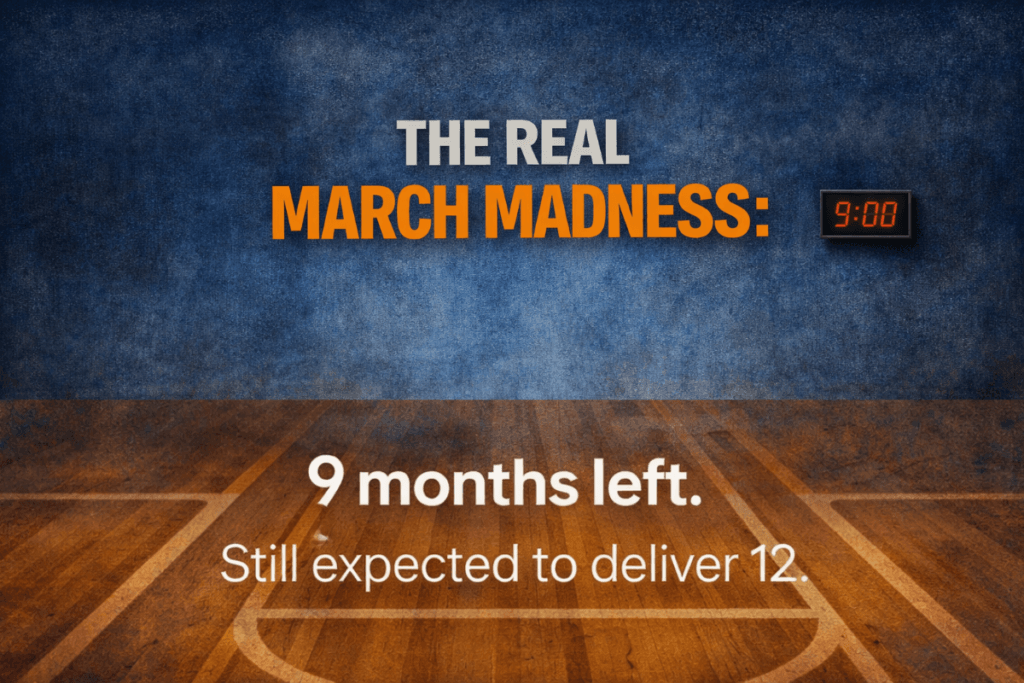
One of the most common phrases after layoffs or reorgs is “do more with less.” It’s meant to inspire resilience, but it’s also a dangerous gamble. You can’t remove capacity and expect output to remain the same. Productivity doesn’t stretch infinitely; it strains and eventually breaks.
Instead of pushing harder, leaders should redefine what success looks like:
- Revisit priorities and drop non-essential work.
- Adjust timelines to reflect the new reality.
- Recognize that maintaining focus and morale is an achievement in itself.
- Provide cover to their teams from unrealistic expectations.
There are times when your team really needs to see that you’re fighting for them. They need to believe you, their leader, has their back when they aren’t around to see it. Your team notices when you fight for them and with them. Leaders who acknowledge limits and say out loud that something has to give send a powerful message: “We value people over performance metrics.”
Helping Teams Rebuild
This moment calls for intentional leadership, the kind that balances empathy with direction. Here are a few ways to support teams through the aftermath of layoffs or reorganizations:
- Talk about it, openly and often. Silence creates uncertainty. Address what happened, acknowledge the loss, and invite honest conversation. You don’t need every answer. You just need to listen.
- Rebuild trust through transparency. Be clear about what’s changing, what’s staying the same, and what’s still unknown. Consistent communication, especially when the message is hard, helps people regain a sense of stability.
- Protect time and energy. Reevaluate workloads. Cancel non-critical meetings. Pause projects that no longer align with priorities. Remember – rest is not a reward. It’s a requirement for sustainable performance.
- Model grace and humanity. Everyone is navigating change differently. Some may push through while others may struggle. Offer compassion and flexibility. People remember how you made them feel long after the reorg is over.
- Celebrate small wins. Progress may look different now, but it’s still worth recognizing. Small victories rebuild confidence and momentum one step at a time.
Moving Forward, Together
In The Leftovers, the world never fully returns to what it was before, but the people who remain learn to live differently. They rebuild community. They find meaning in the midst of uncertainty.
Surviving layoffs or reorganizations isn’t about “getting over it.” It’s about moving through it, together. The strongest teams are not the ones that pretend nothing happened. They are the ones that acknowledge change, adapt with empathy, and find new ways to thrive.
If you’re leading through this kind of change, know this: your people don’t need you to be perfect. They need you to be present. And that is what will carry everyone forward.
Share this post